Understanding Wrist Pain: De Quervain's, TFCC Tears and Wrist Tendinitis Explained
De Quervain's, TFCC tears and wrist tendinitis cause pain in different parts of the wrist. How to tell them apart and when to see a surgeon.
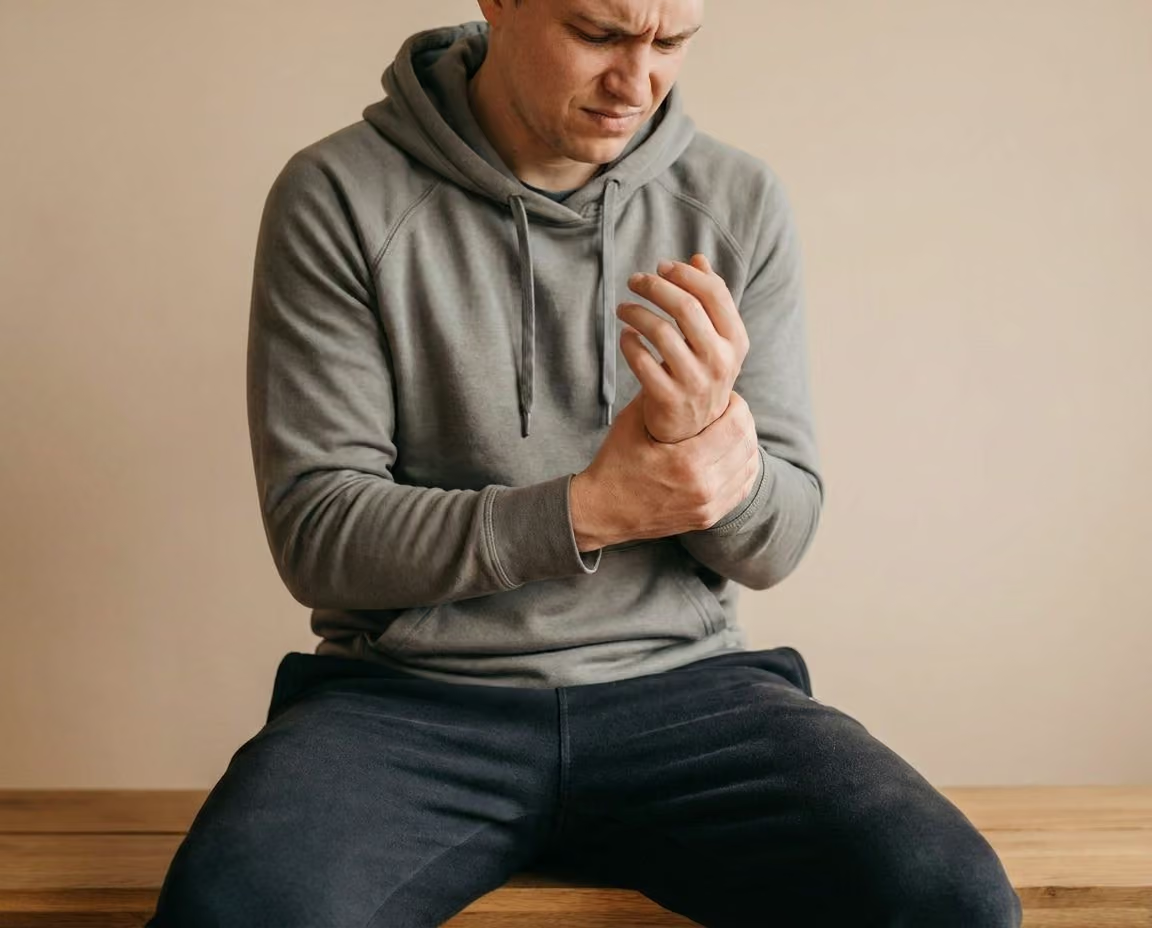


Wrist pain is common, but it can come from several different structures, and knowing roughly where the pain sits is one of the most useful clues to what is causing it. Three of the most common specific diagnoses, De Quervain's tenosynovitis, TFCC tears and wrist tendinitis, each tend to affect a different part of the wrist and respond to slightly different treatment.
In short: pain at the thumb side of the wrist, worse with gripping or thumb movement, points toward De Quervain's tenosynovitis. Pain on the little-finger side, worse with gripping or twisting, points toward a TFCC tear. Pain over the back of the wrist, worse with wrist extension and gripping, points toward wrist tendinitis.
De Quervain's tenosynovitis (thumb side)
Two tendons running from the forearm to the thumb pass through a narrow tunnel at the wrist. Inflammation and thickening of this tunnel causes pain right at the base of the thumb, often triggered by repetitive gripping or lifting tasks such as caring for a baby. Read more about De Quervain's tenosynovitis.
TFCC tear (little-finger side)
The triangular fibrocartilage complex is a cushion of cartilage and ligaments stabilising the little-finger side of the wrist. Tears can follow a fall or forceful twisting injury, or develop gradually with age and repetitive loading, and typically cause pain with gripping and rotational movements such as turning a doorknob. Read more about TFCC tears.
Wrist tendinitis (back of the wrist)
Several tendons cross the back of the wrist on their way to the fingers, and irritation of these tendons and their sheaths, most often the extensor carpi radialis tendons, is a common cause of pain and swelling over the back of the wrist and lower forearm, often related to a sudden increase in gripping, typing or gym activity. Read more about wrist tendinitis.
Wrist pain at a glance
- De Quervain's tenosynovitis: pain at the thumb side of the wrist, worse gripping or moving the thumb
- TFCC tear: pain at the little-finger side of the wrist, worse gripping or twisting
- Wrist tendinitis: pain over the back of the wrist and forearm, worse with wrist extension and gripping
Why the location matters
These three conditions can have overlapping triggers, repetitive gripping, a new activity, or a sudden increase in training or manual work, but the tissue affected, and therefore the exact location of pain, differs. Getting the diagnosis right matters because treatment, while broadly similar in principle, is targeted to the specific structure involved, such as which tendon sheath is splinted or which tendon is injected.
How they are assessed
Assessment typically starts with a history of the pattern and location of pain, together with an examination that reproduces symptoms with specific movements. Imaging, such as ultrasound or MRI, is used where the diagnosis is unclear or symptoms are not settling as expected.
Treatment in common
All three conditions are generally managed in a similar staged way: activity modification and a period of splinting to rest the affected tendons, physiotherapy to correct the load or technique that caused the problem, and a corticosteroid injection for more persistent symptoms. Surgery, such as De Quervain's release or TFCC repair performed via wrist arthroscopy, is reserved for the minority of cases that do not settle with non-surgical treatment.
The bottom line
Wrist pain has several common causes, and the location of the pain, thumb side, little-finger side, or the back of the wrist, is one of the most useful clues to which one you are dealing with. Persistent wrist pain, particularly if it is affecting grip or daily tasks, is worth having assessed so the right structure, and the right treatment, can be identified.